
10 October 2025
Do You Need Planning Permission to Change Your Conservatory Roof?
Quick Answer: Most UK homeowners can replace a conservatory roof without planning permission. If the structure isn’t changing in size or height, the work typically falls under permitted development, though you will still need building regulations approval.
Disclaimer
This guide provides general planning and building regulation information. Rules vary by local authority, and responsibility for compliance rests with the homeowner. Always consult your local planning department or contact a qualified building professional before starting work.
Why Planning Permission Causes Confusion
Homeowners often ask: Can you change a conservatory roof without planning permission?
Researching online usually leads them to conflicting advice, partly because old regulations (like the 75% glazed rule) no longer apply, and partly because building control requirements are often misunderstood.
This page answers the question clearly and provides practical, step-by-step pathways, local authority references, and expert-backed explanations so you can confidently determine the correct route for your project.
Planning Permission vs Building Regulations
Before you start planning a roof upgrade, it’s crucial to understand the difference between planning permission and building regulations; one controls how your home looks, the other ensures it’s safe.
What Planning Permission Covers
Planning permission determines whether an alteration affects a property’s appearance, scale, or impact. Most small residential changes fall under Permitted Development Rights (PDRs).
To see government-approved PDR rules, visit the Planning Portal.
What Building Regulations Cover
Building regulations focus entirely on:
- safety
- structural integrity
- insulation
- ventilation
- fire performance
- durability
A conservatory roof replacement, especially a solid or tiled roof, almost always requires building regulation approval due to the increased weight and insulation requirements.
For official guidance, see GOV.UK Building Regulations and LABC.
The 2010 Regulation Change
A significant rule change in 2010 transformed what homeowners can do with conservatory roofs. Here’s how it happened, and why solid, tiled systems are now so popular:
The Old 75% Glazed Rule
Before 2010, conservatories needed a mostly transparent roof to remain classified as conservatories, severely limiting homeowners’ options.
The Post-2010 Rules
Modern regulations allow conservatories to have:
- solid tiled roofs
- hybrid insulated roofs
- lightweight structural panels
As long as the upgrade meets building control standards. Most solid-roof conservatory upgrades do not require planning permission, provided the footprint and height remain unchanged.
When You Usually Do Not Need Planning Permission
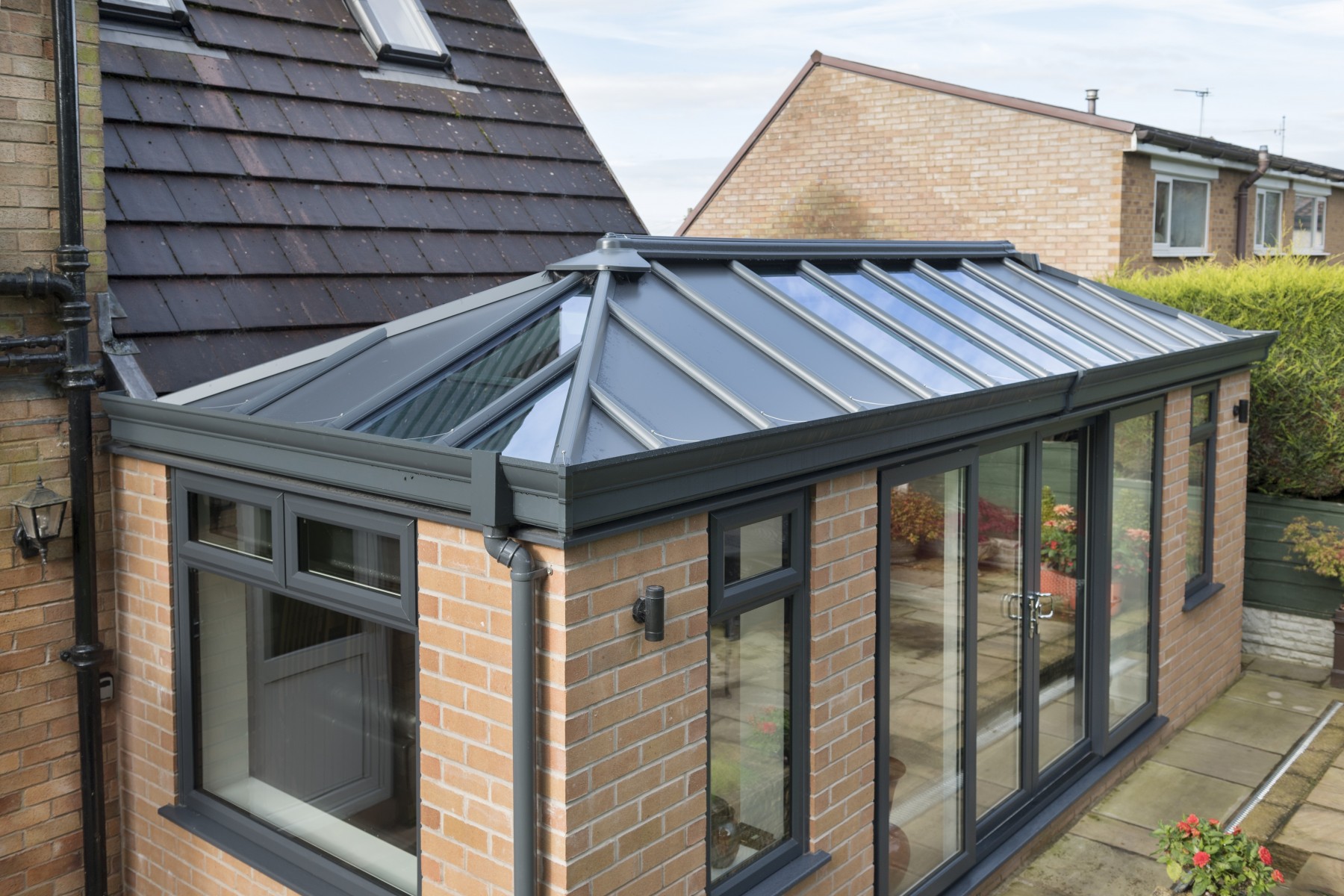
Most conservatory roof upgrades fall under permitted development. If you’re exploring compliant upgrade options, our page on conservatory roof replacement explains the systems we install and what’s involved in bringing an older structure up to modern standards. This section outlines everyday situations where no planning application is required:
Standard Cases Covered by Permitted Development Rights
You typically do not need planning permission if:
- The conservatory remains the same size
- The roof height does not increase
- No raised platforms, balconies, or verandas
- The materials are similar in appearance
- The property is not subject to Article 4 restrictions
Building types apply to:
- tiled roof conservatory upgrades
- solid roof conservatory replacements
- insulated roofing system upgrades
Why Installers Often Say “No Permission Needed”
Experienced builders confirm that most roof replacements fall under standard home improvement rules. In dozens of projects across Bournemouth, Poole, and Christchurch, Urban Edge Modular rarely encounters situations that require a planning application, unless the structure is being rebuilt or the property is restricted.
When You May Need Planning Permission
Some homes and certain types of roof changes fall outside permitted development. Here’s when planning permission might still be required:
Properties in Protected Areas
Homes located in:
- Conservation areas
- National Parks
- AONBs
- World Heritage Sites
- Listed buildings
May have restricted or removed PDRs.
Listed buildings almost always require listed building consent.
Changes That Affect Height, Structure, or Appearance
You may need planning permission if the upgrade:
- Raises the roof height
- Changes the slope or pitch
- Introduces structural reinforcement visible from the outside
- Adds roof lights that alter the external appearance
Article 4 Directions
Some estates have Article 4 restrictions removing permitted development rights entirely. Checking your local planning map will confirm this.
https://www.dorsetcouncil.gov.uk/article-4-directions-restrictions-on-permitted-development
What Applies to Roof Replacements?
Even when planning permission isn’t needed, building regulations still apply. This section breaks down the rules every roof replacement must meet.
Structural Stability
Building control checks:
- foundation strength
- lateral load resistance
- beam and rafter performance
- weight-bearing capacity
Urban Edge Managing Director Greg Tatchell brings over 35 years of practical experience. In his work, he frequently finds that older conservatories, especially those built before 2005, need structural reinforcement before a solid roof can be installed.
Thermal Efficiency
Modern roofs must meet strict U-value targets under Part L of the regulations. Even insulation-only upgrades require building control oversight.
Fire Safety and Ventilation
Building regulations also assess:
- Fire-resistant insulation
- Adequate ventilation routes
- Thermal separation between the house and the conservatory
- Safety glazing requirements
Why Compliance Matters
Skipping a building regulations certificate can:
- Invalidate insurance
- Cause mortgage refusals
- Prevent property sales
- Trigger enforcement action
Urban Edge always handles building control approval as part of the process.
Homeowner Planning Permission Pathway
Use the following steps to determine your route:
1. Does the upgrade change the roof height or footprint?
- No: Likely no planning permission needed.
- Yes: Planning permission may be required.
2. Is your home in a protected or listed area?
- Yes: Speak to your local authority before proceeding.
- No: Continue.
3. Are you upgrading to a solid or tiled roof?
- Yes: Building regulations approval required.
- No: Insulation-only upgrades still require compliance.
4. Is your conservatory structurally strong enough?
- Unsure: A structural assessment is essential.
Common Planning Permission Misunderstandings
Many homeowners hear mixed messages about conservatory roofs. This section clears up the most common misconceptions:
A solid roof always needs planning permission.
Incorrect. The material does not determine planning status. However, the height and footprint do.
Roof insulation doesn’t require approval.
It does. Insulation changes the thermal performance of the structure and must meet building control standards.
A new roof makes the conservatory an extension.
Not unless walls and doors are removed and the conservatory becomes one continuous heated space.
Special Cases & Edge Conditions
Most projects are straightforward, but certain homes fall under different rules. These are the situations where planning or building control can get more complex:
Flats and Maisonettes
These properties do not have PDRs, so planning permission is usually required.
Conservation and Heritage Settings
Urban Edge Managing Director Greg Tatchell has completed several upgrades on older Dorset properties where the visual impact required careful review and consultation with local planning officers.
Key Takeaways
Most homeowners do not need planning permission to change a conservatory roof, whether opting for a tiled roof, a solid roof, or an insulated roofing system. The crucial factors are height, footprint, and location restrictions. However, building regulations almost always apply due to structural and insulation requirements.
Using the decision-making pathway and the official authority links above will give you a clear route to follow.
About Urban Edge Modular
Greg Tatchell at Urban Edge Modular has over three decades of hands-on construction experience. His expertise in structural assessment, insulated roofing systems, and compliance with building regulations ensures that every Urban Edge project exceeds safety and performance standards.
Learn more about our team on the About Us page.